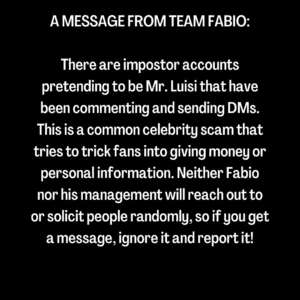
The story of an extortion scam
This story starts on Thursday, June 18. I am traveling very early in the morning from Amsterdam, where I conducted a performance of Simone Boccanegra at the Dutch National Opera the evening before, and I am going home to Switzerland. On that day, I have a couple of appointments, my doctor, and some official meetings at the Community Hall where I live.
On the train from the airport to my home, I see on my phone that I received a message on my Telegram account. I don’t have an official Telegram account; I only have an old one that I rarely use (not at all for a long time). I opened it to join music groups under an unidentified pseudonym, to scroll through other groups, and to participate in discussions, mostly about music, without revealing my identity. As I said, I didn’t use this account for a long time, and I remember receiving login codes I didn’t request from time to time. This happens quite often, and it happened to me, especially about a year ago or a bit longer, when someone impersonated me on social media, claiming to be me and asking for money in exchange for auditions or recommendations.
The message I received was a common extortion scam. I was told to pay 2,000 euros in gift cards to prevent some information from being made public. It didn’t specify what information, but it proposed negotiations and included my full name, Fabio Luisi. I didn’t think much of it and deleted the message without responding. Since I no longer used the Telegram account, I also decided to delete it when I got home. Now I wish I hadn’t done this. This evidence is missing.
On the evening of Thursday, June 18, I traveled to Copenhagen, where the next day I had the final recording session for Arnold Schönberg’s Pelleas und Melisande.
Nothing happened until Saturday afternoon, when I arrived in Amsterdam again for Sunday’s performance. In the taxi to my apartment, I received a WhatsApp message, apparently from a UK number, asking why I had deleted my Telegram account. This time I responded, asking who was asking. The answer was “Bescorts” and included a screenshot of my Telegram account information and a screenshot of a photograph of me, obviously looking at my computer. I asked what that was about, and the person on the other end began talking about a deal I had made with him and broken, involving payment of 5,000 euros, and asked me to negotiate, menacing to contact me and my wife’s agency (why the agency?) in exchange for not reporting me as a pedophile.
This time, I didn’t delete the message immediately. The accusation was too serious, and the fact that this person had either hacked or mirrored my (now non-existent) Telegram account and stolen a photograph of me from my website was a bit too scary. I stopped the conversation, told this person I was going to the police, and blocked the sender. I still have this message on WhatsApp, and I made screenshots.
One hour later, I received a second WhatsApp message, this time from a number in Congo. The sender asked me to unblock him and negotiate. This time, I didn’t engage and blocked the sender. I still have this message and have taken screenshots. It ends with “Unblock me. Let’s negotiate before I ruin your life and career.”
The same evening, I contacted my attorney in Switzerland. She responded immediately, saying it is extremely common to receive this kind of message. The next morning, after consulting with another attorney, she wrote to me again. She told me that going to the police can make sense, but that the police receive hundreds of such complaints and reports, and that, since these scammers are often in Asia or Africa, it is extremely difficult to pursue them. She also said that scammers usually give up after a few days or weeks, and that I should not respond to or engage with them in any way.
The next day, Sunday the 21st, after a successful performance of Simone Boccanegra, I had a longer phone call with her, during which I told her I wanted to go to the police in Switzerland to officially file this report. Should this issue escalate, I don’t want them to tell me, “You should have come to us earlier.” She agreed and offered assistance.
This situation, as everybody can understand, is very serious for me. Being a “public person” is a responsibility, and today, everything said about someone can be amplified and find believers, even if it is not true.
The person behind this extortion scam clearly knows who I am, where I live, and what I do for a living. He has obtained access to my Telegram account (which no longer exists). He refers to a chat that, if it exists, never happened with me, which is either fabricated or conducted with someone posing as me.
On Monday evening, I tried to access my webpage to post content, but couldn’t. I immediately contacted my administrator. After 20 minutes, the page was accessible again, so I thought I was being paranoid… But my administrator confirmed that there had been 11 attempts to access the page (all rejected)…
Let’s see how this story evolves.
There have been no further attempts to hack my website after Monday evening.
As of today, Wednesday, June 24th, there is no crucial development, except that I received a message on my personal X account (which I have not used for at least 15 years) containing an access code I did not request. I don’t know if this is related to this, since I do receive alert messages from time to time from different service accounts (even from Spotify! – please enjoy my Spotify account; there is great music on it!).
At the Police Station (Kantonspolizei)
I was at the Kantonspolizei in Zurich this morning (June 25th). I explained my case and brought all screenshots I had taken of conversations, the phone calls I received, and the attempts to hack my website (including IP addresses from which the attempts were made). I also provided confirmation of the attempt to access my personal X account (now disabled).
The very friendly police officer, Mr. Huber, after examining all the evidence, explained to me that there are hundreds of such extortion scams every week in Switzerland and that my report matches those of thousands of other people. If I have not paid anything (and I have not, of course), it is impossible to go back to the perpetrator. They are mostly in Africa, and they also fabricate fake evidence (AI-generated photos and videos). They can even access computers and phone conversations remotely. He told me I have nothing to fear and that I reacted rightly by not responding and blocking all attempts to contact me. He also told me that he understands that this is very upsetting, but usually, when the victim is not inclined to talk or pay, they move on to the next victim. This is a very common scam, and my scam, the messages, the chats, even the wording of the scammer, follows this scheme.