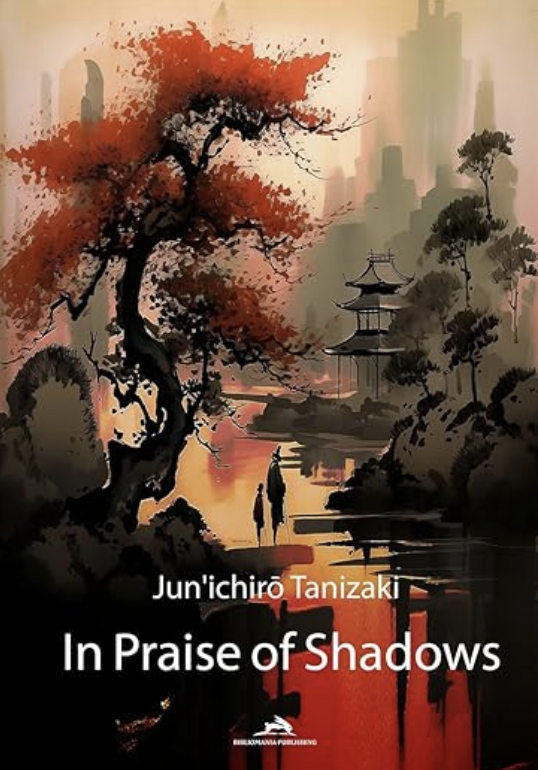
È un libro sulla bellezza. Ma una dimensione di bellezza spesso trascurata, quella che emerge dai contrasti luminosi: non una bellezza scaraventata verso l’osservatore in piena luce, ma quella che viene creata dal buio, dall’ombra, dal segreto del crepuscolo. Bellissimi i paragrafi sulla lacca giapponese (come del resto quelli sui costumi del Teatro No), il cui valore estetico è completamente percettibile solo nella penombra delle stanze giapponesi, e non in piena luce, che ne rende le decorazioni in oro troppo sgargianti. Questo libro è anche un inno ai tempi antichi ed un appello per la salvaguardia della bellezza almeno nella poesia e nella letteratura. Scritto in modo semplice e facile da leggere, si tratta di un saggio di un autore importante soprattutto per lo sviluppo della letteratura (con tema sessualità ed erotismo) giapponese dopo l’era Meiji, che poi porterà ad uno scrittore noto anche all’occidente come Yukio Mishima.
It is a book about beauty. But a dimension of beauty often overlooked, the one that emerges from light contrasts: not a beauty thrown at the observer in whole light, but created by darkness, shadow, and the secret of twilight. The paragraphs on Japanese lacquer are beautiful (as are those on the costumes of the Noh Theater), whose aesthetic value is entirely perceptible only in the dim light of Japanese rooms and not in whole light, which makes the gold decorations too gaudy. This book is also a hymn to ancient times and a call for beauty protection, at least in poetry and literature. Written in a simple and easy-to-read way, it is an essay by an author who is essential above all for the development of Japanese literature (with the themes of sexuality and eroticism) after the Meiji era, which leads to a writer also known in the West as Yukio Mishima.
